What is RAMS in Construction? A Guide for SMEs
If you have ever had a site manager push your paperwork back across the table and say, “This does not match the job,” you already know the problem. RAMS are meant to help work run safely and smoothly. Too often, they just slow everything down.
The Admin Burden
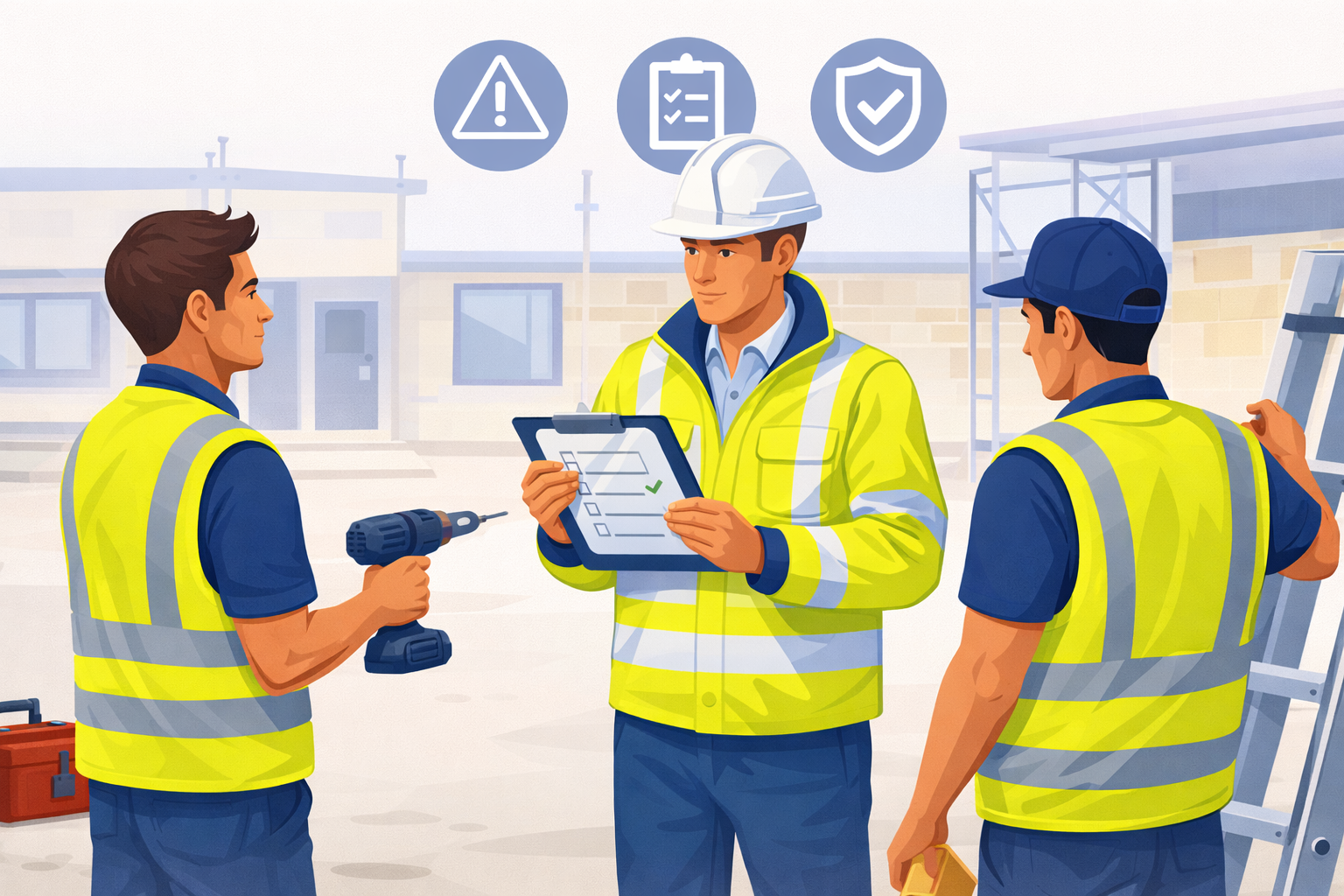
For small and medium contractors, RAMS can feel like a box-ticking exercise that eats time at the worst moment, usually just before work is due to start. Systems are complicated. Templates look quick but carry hidden risk. And once the document is questioned, the delay is on you.
This knowledge hub guide explains what RAMS are, why they matter, and how SMEs can approach them in a way that is defensible and practical for routine construction work.
What does RAMS mean?
RAMS stands for Risk Assessments and Method Statements.
A risk assessment identifies what could cause harm during a task and sets out controls to reduce that risk. A method statement explains how the work will be carried out safely, step by step.
In construction, the two are normally combined into a single document, often referred to as RAMS for small and medium contractors. That document tells anyone reading it what the job is, how it will be done, and how people will be kept safe while doing it.
RAMS are not about covering every possible scenario. They are about clearly describing the actual work you plan to carry out.
Why RAMS cause problems for SMEs
Most issues with RAMS come from one of two places.
The first is complexity. Large safety management systems are often designed for major projects, not small teams doing routine work. They ask for excessive detail, repeat information, and take far longer than the job itself.
The second is templates. Generic RAMS are easy to copy, but they often include risks, controls, and wording that have little to do with the task on site. When paperwork does not reflect reality, it stands out immediately.
The “Generic Trap”
The Template
Lists “Working at Height” generically. Includes hazards not present on site. Uses vague language like “Ensure safety.”
The Result
Site Manager rejects it. “This does not match the job.” Work stops. Reputation damaged.
This is why site managers challenge RAMS. If the document says one thing and the work looks different, confidence is lost. Revisions are requested, supervisors wait, and productivity drops.
From a safety point of view, generic RAMS are also weak. If something goes wrong, it is harder to show that risks were properly considered for that specific task.
Where RAMS fit and where they do not
RAMS are intended for routine, non-specialist construction activities carried out by competent contractors.
They work well for planned tasks where hazards are known, controls are established, and the work follows a sensible sequence. They are not suitable for high-risk or specialist activities that require detailed engineering input, specialist design, or separate permits.
This boundary matters. Forcing every task into the same RAMS process either creates paperwork that is meaningless or encourages people to downplay risk. Neither helps anyone.
⚠️ Scope of Guidance: This guide is intended for routine, non-specialist works. RapidRAMS does not support high-risk activities such as Asbestos Removal, Structural Demolition, or Live Gas Works. For these tasks, you should consult a specialist safety engineer.
The safety logic behind RAMS
UK health and safety law does not require paperwork for its own sake. It requires risks to be assessed and managed in proportion to the work.
The Health and Safety Executive makes this clear across its guidance, including documents such as L153 and the INDG series. The expectation is that risk assessments are suitable and sufficient, and that method statements explain how controls will actually be applied.
In practice, this means RAMS should be based on the job as planned, not on generic phrases copied from somewhere else. They should be understandable to the people doing the work and credible to those reviewing it.
“Good RAMS reflect thinking, not formatting.”
A more practical approach to RAMS
This is where tools like RapidRAMS fit.
RapidRAMS is designed for competent contractors carrying out routine construction work who want proportionate documentation without handing responsibility to a consultant or paying for work that does not add value.
The software generates RAMS documentation based entirely on information declared by the user through a structured web form. The output reflects what the user says about the task, the environment, and how the work will be done.
There is no generic padding and no invented risks. If a control is not supported by the inputs, it does not appear. If the task falls outside defined boundaries, the system refuses to generate documents.
This matters because many RAMS fail precisely because they say too much. RapidRAMS applies consistent UK safety logic but stays within scope. The contractor remains responsible for the content, because it is their declaration that drives the document.
The result is RAMS that are task-specific, readable, and aligned with what actually happens on site.
Why task-specific RAMS matter
When RAMS match the work, discussions on site change. Supervisors recognise the task. Site managers see logic rather than filler. Questions reduce, and work starts sooner.
More importantly, people understand the controls they are expected to follow. That is the real purpose of RAMS.
For SMEs, the goal is not perfect paperwork. It is clear, honest documentation that follows established HSE principles and supports safe work without slowing it down.
Ready to create task-specific RAMS?
Generate a site-ready PDF