
Bricklaying RAMS: How to Pass HSE Checks on Silica and Cement
At a Glance: Bricklaying RAMS and Safety
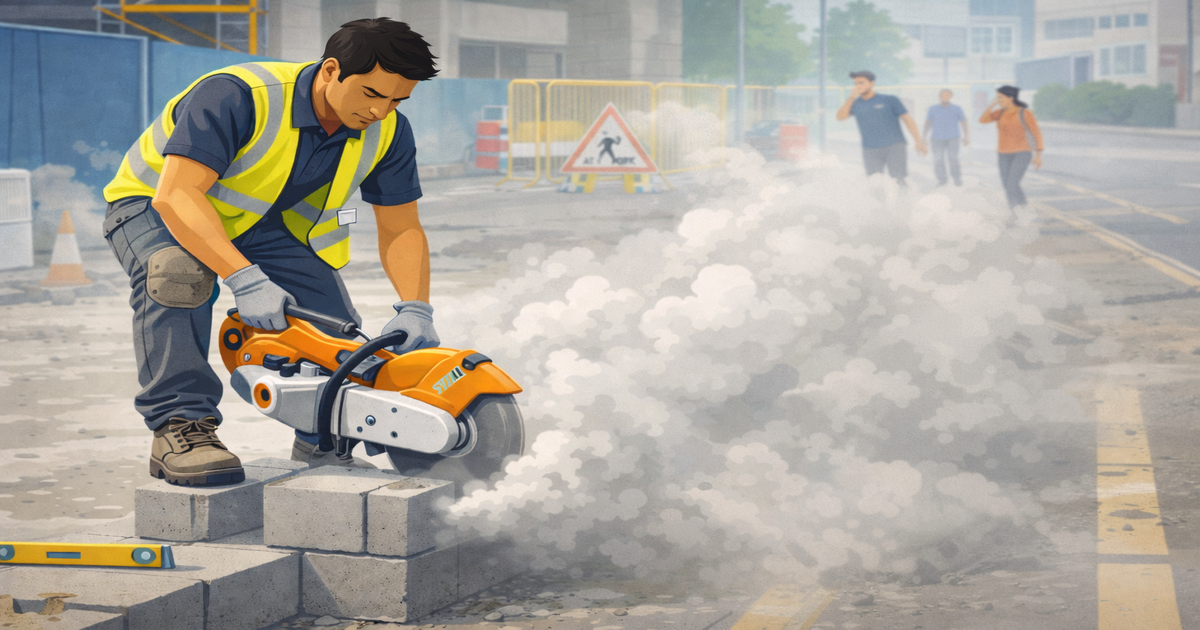
- The dust beacon: Visible dust plumes from dry cutting act as a beacon for HSE inspectors. A lack of documented suppression leads to immediate work stoppages and intervention fees.
- Controlling Silica dust: The HSE targets small sites for Respirable Crystalline Silica. Compliant RAMS must specify water suppression or extraction as the default engineering control, not just masks.
- The quick cut myth: Safety logic is black and white. A professional method statement removes the option for a “30-second dry cut,” requiring dust suppression for cutting tasks regardless of duration.
- Cement and skin health: Wet cement causes chemical burns and dermatitis. A generic “wear gloves” instruction is insufficient; RAMS must specify barrier creams, washing facilities, and chemical-resistant gloves.
- Defining access limits: Bricklayers work from scaffolding but do not build it. Your risk assessment must clearly state that you inspect scaffold tags before use but never remove ties or modify the structure.
The dust cloud beacon
You are on a small housing site. The mixer is running, the hods are moving, and the rhythm is good.
Then, one of the lads needs a closer for the end of the run. He grabs the Stihl saw, puts a foot on a block, and dry cuts it.
A massive plume of white dust goes up. It drifts across the site boundary and onto the cars parked next door.
That dust cloud is a beacon. If an HSE inspector is driving past, they will turn around. If a neighbour sees it, they will phone the council. The result is the same: the job stops.
The inspector walks onto the site, and the first thing they ask for is your risk assessment for bricklaying. For most small sites, this falls under routine general building work. If that document doesn’t explicitly cover Respirable Crystalline Silica (RCS) suppression, you are looking at a Notification of Contravention and a fee for intervention.
The Visible Compliance Check
❌ Dry cut (non-compliant)
- • Visible dust plume
- • Immediate HSE Beacon
- • Risk of intervention fee
✅ Suppressed cut (compliant)
- • Water bottle or extraction used
- • No visible plume
- • Compliant RAMS
The HSE crackdown on Silica
Respirable Crystalline Silica (RCS) is the biggest health target in the trade right now. The HSE now treats uncontrolled Silica exposure as a serious health risk, particularly on smaller sites.
The old attitude of “it’s just a bit of dust” is gone. Silica dust scars the lungs permanently. Because of this, inspectors are targeting smaller sites where dry cutting is still common.
Your paperwork needs to match the reality. You cannot have a method statement that says “wear a mask” while your team is engulfing themselves in dust.
The method must state engineering controls first. This means water suppression bottles or vacuum extraction on the tool. If your RAMS don’t clearly set out how dust is controlled at source, they are not compliant.
The “30-second cut” trap
The biggest friction point on site is the “quick cut.” A bricklayer argues: “It takes 30 seconds to cut this block. It takes me five minutes to set up the water bottle and hose.”
This is true. But the safety logic is black and white. You are either controlling the dust, or you are not. A professional masonry method statement accounts for this.
It states that water suppression is the default method, regardless of cut duration. It removes the option for the “quick dry cut” that gets the site shut down.
“There is no such thing as a ‘30-second dry cut’ under HSE expectations.”
The silent burn of wet cement
While Silica gets the headlines, wet cement can end careers. Many bricklayers treat cracked, bleeding hands as part of the job. They shouldn’t. Wet cement is highly alkaline.
It doesn’t just dry the skin; it causes chemical burns and allergic dermatitis. Once a bricklayer develops a sensitivity to hexavalent chromium in cement, they often have to leave the trade entirely.
A standard COSHH assessment for cement often just says “Wear gloves.” That is not enough.
Your RAMS need to specify:
- Barrier creams before work starts.
- Washing facilities to remove cement immediately, not at lunch time.
- Correct glove standards (chemical resistance, not just rigger gloves).
Defining routine access
Your RAMS must also be clear on where your responsibility starts and ends regarding access. As a bricklaying contractor, you work from access provided by others.
You work from:
- Pre-erected tube and fitting scaffolds
- Loading bays
- Mobile Elevated Work Platforms (MEWPs)
- System scaffolding
You do not erect, alter, or dismantle scaffolding. That is a specialist trade. Your risk assessment should clearly state that you inspect the scaffold tag before use, but you do not modify the structure.
If you start moving boards or taking out ties to get a pack of blocks in, you are taking on a risk you are not insured for.
Why generic templates fail on COSHH
This is why downloaded templates are dangerous. A generic “Building Works” risk assessment might list “Dust” as a hazard and “Masks” as a control.
That is too vague for a commercial site manager. They want to know:
- Is face-fit testing in place?
- How is dust suppression achieved on site?
- What FFP rating are the masks? (Must be FFP3 for Silica).
If you hand over a document that doesn’t answer these questions, you look like an amateur.
A system that applies the right safety controls
RapidRAMS works differently from a text editor. It links the hazard to the specific controls expected for that task.
Automated Silica Control
When you select “cutting blocks” or “grinding out mortar” as a task, the system builds the RAMS document automatically with the correct controls, including suppression, extraction, and the appropriate respiratory protection.
COSHH built-in
When you select “mixing mortar” or “pointing,” the system pulls in the correct cement dermatitis prevention data. It lists the specific alkaline risks and the required barrier controls. You don’t have to go looking for the safety data sheet; the logic is already there.
Site-Specific Reality
It allows you to declare the specific equipment for this job. If you are using a Stihl saw with a pressurised water bottle on a remote site, the document reflects that. If you are using a masonry bench saw with recycled water on a large commercial job, the document reflects that.
Winning work with better paperwork
Commercial clients are cautious about two things: accidents and HSE fines. If you submit a tender that includes a specific, detailed RAMS pack covering Silica suppression and skin protection, you solve a problem for them.
You prove that you are not going to be the contractor who brings an enforcement notice onto their project. You protect your lungs, you save your hands, and you win the contract.
From our Knowledge Hub, covering practical safety requirements contractors face on managed sites.
Bricklaying RAMS That Stand Up to HSE Checks
Clear controls for silica dust, cement, and site access