RAMS for Skip and Scaffold Permits (UK Councils)

RAMS for Skip and Scaffold Permits (UK Councils)
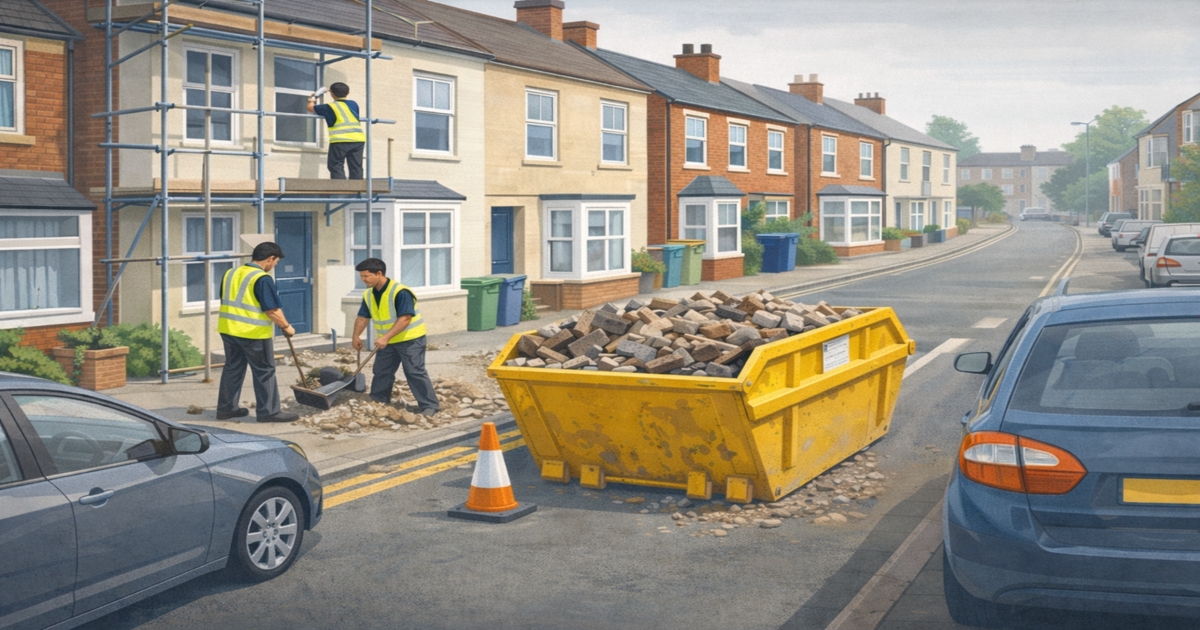
Builders working on a terraced street with scaffolding erected and a skip placed on the road, protected by traffic cones.

At a Glance: Skips, Scaffolds, and Highway Licences

  • The trigger: If a skip or scaffold goes on the road or pavement, a Council highway licence is required.
  • The Council’s concern: Highways departments focus on public safety and liability, rather than internal site safety.
  • The key test: To pass, RAMS must address visibility (lighting), vehicle protection (cones), and pedestrian access.
  • The common failure: Generic building risk assessments are regularly rejected because they fail to mention public highway controls.
  • The outcome: Submitting highway-specific RAMS speeds up the approval process by addressing liability concerns upfront.
Est. Read Time
⏱️ 6 Minutes

Pro Tip
💡 Light It Up

Key Takeaway
✅ Liability First

The driveway problem

You turn up to quote a job. It is a terraced street with on-street parking and a postage-stamp front garden. The client wants a loft conversion or a rear extension.

You know immediately that you cannot get the materials in the garden, and you certainly cannot get a skip on the driveway. It has to go on the road.

You ring the skip company. They ask: “Have you got the permit?”

You ring the Council. They say: “We need to see your public liability insurance and your risk assessment.”

Suddenly, a simple logistics problem becomes a paperwork hurdle. If you cannot provide the right documents, the Council refuses the permit. No permit means no skip. And without a skip, you are hand-balling rubble into a van for three weeks.

“No permit means no skip. And without a skip, you are hand-balling rubble into a van for three weeks.”

Why the Council cares

To a builder, a skip is just a metal box. To the Council Highways Department, it is an obstruction.

Under the Highways Act 1980, the local authority is responsible for keeping the roads and pavements safe. If a cyclist hits your unlit skip in the dark, or a pedestrian trips over a scaffold leg, the Council can be held liable if they issued a permit without checking you knew what you were doing.

From their side, it’s about liability, not red tape. They are checking that you understand the rules of the road.


What the paperwork must show

A standard “building works” risk assessment doesn’t answer the questions they’re asking. The Council does not care about your dust masks or your steel toe caps. They care about the public.

A specific risk assessment for placing a skip on the road needs to answer three main questions:

  • Visibility: How will drivers see the obstruction at night? (e.g., Amber flashing lamps attached to the corners).
  • Protection: How will you stop cars hitting it? (e.g., Traffic cones placed on the approach).
  • Pedestrians: How will people walk past? (e.g., Maintaining a clear, unobstructed pedestrian route on the pavement.).

If your document does not mention lighting or cones, it is likely to be rejected.

What the Council actually checks

💡

Visibility
Amber flashing lamps

🚧

Protection
Cones / vehicle impact

🚶

Pedestrians
Clear walking route

The “General Builder” blind spot

For general builders, this is often a blind spot. You are used to managing the site inside the boundary line. Stepping outside that line onto public land brings a different set of risks.

Many builders assume the skip company sorts the permit. While some do, many local authorities now insist that the contractor applies for the licence because the contractor is the one filling the skip.

The same applies if you need a method statement for working on public highway areas, such as putting up hoarding or a scaffold tower. The method statement needs to describe how you will build the structure without dropping a clamp on a passerby.


Common reasons for rejection

When applying for a licence, speed matters. You usually want the permit to start Monday. If the Council rejects your RAMS on Thursday, you are stuck.

Common failures include:

  • Missing dates: Not stating when the obstruction will be removed.
  • No lighting plan: Failing to mention battery-operated amber lamps.
  • Blocking the path: Not leaving enough room for a wheelchair or pram to pass safely.
  • Wrong template: Sending a generic risk assessment for internal joinery when you need RAMS for a pavement licence application.

The person reviewing your application is likely a Highways Officer. They look for clear references to signage, lighting, and pedestrian protection. If those controls aren’t present, applications often stall.

Why applications get stuck

Missing removal dates
No lighting plan
Pavement blocked
Wrong RAMS template

A system built for permits

This is where RapidRAMS helps you clear the hurdle. Instead of asking you to write a traffic management plan from scratch, the software reacts to a simple choice.

You simply confirm that the skip or scaffold is going on a public highway. The software links the correct safety controls to that answer. It pulls in the requirements for amber flashing lights, traffic cones, and pedestrian clearance widths without you needing to type them out.

Because the system builds the Highway rules into the document, the resulting risk assessment for a skip licence speaks the Council’s language. It confirms you have considered the public, the traffic, and the lighting.


Getting the permit signed off

The goal is to get the box ticked so you can get on with the build. By submitting a professional, specific document that addresses the Highway concerns upfront, you make it easy for the Council to say yes.

You get your permit, the skip arrives on time, and you aren’t left hand-balling bricks.

R
Author
Written by the RapidRAMS Compliance Team
Content verified against current HSE guidance on: February 06, 2026

📚
More Guides Available

This guide forms part of our Knowledge Hub, covering real-world RAMS requirements for UK contractors working on managed sites.

Visit Knowledge Hub →

Stop permit delays before they start

Task and site-specific RAMS without the guesswork

£15

Do I need a permit to put a skip on the road?

Yes. Placing a skip or scaffold on the public highway requires a licence from the local Council.

Why does the Council ask for RAMS?

They require RAMS because a skip is an obstruction on public land. The Council needs proof that you have managed the risk to the public to limit their own liability.

What does a highway RAMS need to include?

It must include specific controls for night-time lighting, traffic protection (cones/barriers), and maintaining safe pedestrian access past the obstruction.

Who usually applies for the licence?

While some skip companies handle it, many Councils now insist that the contractor applies for the licence, as they are responsible for filling the skip.

Why do applications get rejected?

Common reasons for rejection include missing removal dates, failing to include a lighting plan, blocking the pavement, or using a generic template that doesn’t fit the highway context.

RAMS for Schools and Offices: What Facilities Managers Expect to See

RAMS for Schools and Offices: What Facilities Managers Expect to See

Builder discussing safety paperwork with a facilities manager in a school corridor

At a Glance: RAMS for Occupied Buildings

  • The segregation gap: Domestic RAMS focus on worker safety. Commercial RAMS must focus on public safety. If you don’t document how you separate the public from the work, the Facilities Manager will reject you.
  • Guest status: In an occupied school or office, you are a guest in a live environment. Your paperwork must prove you understand the rules around movement, access, and interaction with staff.
  • Tool discipline: An unattended drill is a minor issue in a private house but a major incident in a school. RAMS must explicitly state that tools are secured and supervised at all times.
  • Managing movement: You cannot rely on standard delivery times. Deliveries must be timed to avoid peak public movement (e.g., the school run), often requiring banksmen for vehicle access.
  • Sensor sensitivity: Dust from sanding can trigger optical smoke sensors and cause building-wide evacuations. Your method statement must account for dust control and sensor awareness to prevent false alarms and call-out charges.
Est. Read Time
⏱️ 7 Minutes

Pro Tip
💡 Segregation is Key

Key Takeaway
✅ You Are A Guest

The gatekeeper holds the keys

You have won the tender for a classroom refurbishment or an office toilet block upgrade. The price is agreed, the start date is set, and the skip is booked.

You arrive for the pre-start meeting, hand over your safety folder, and wait for site access to be approved. The Facilities Manager (FM) or Site Manager flicks through your paperwork.

They stop at the method statement, frown, and hand the folder back.

“You can’t come on site with this,” they say. “This risk assessment doesn’t cover segregation. And you haven’t shown how you’re keeping the public safe, or how you’re managing deliveries.”

The job is stalled. You are a competent builder, but your paperwork makes you look like a risk to the public.

“On an occupied site, the work isn’t the risk. The interaction with people is.”

The “Segregation Gap”

The reason RAMS for schools and offices get rejected is rarely because the builder doesn’t know how to build. It is because the paperwork is focused on the wrong risk.

A standard “domestic” risk assessment focuses on the worker. It asks: How do I stop the builder falling off the ladder? How do I control the builder’s exposure to dust?

In a commercial environment, the FM asks a different question: How do I stop the staff and children from getting hurt by the builder? This is consistent with HSE guidance on managing risks in schools and other occupied buildings.

If your method statement for commercial refurbishment does not explicitly detail how you will separate your work from the public, it will fail. This is the “Segregation Gap.” You might intend to lock the door, but if it isn’t written into the RAMS, the site manager has to assume it won’t be controlled.

“If it isn’t written into the RAMS, the site manager has to assume it won’t be controlled.”

The FM’s Mental Checklist

  • Exclusion zones defined
  • Public routes protected
  • Deliveries separated from peak movement
  • Tools secured when unattended

The hidden hazards of occupied buildings

When you work in an empty house, you manage the site. When you work in an occupied school or office, you are a guest in a live environment. The rules change completely.

Tool Control

In a private extension, putting a cordless drill down for two minutes while you grab a coffee is fine. In a primary school, an unattended drill is a major incident waiting to happen.

Your RAMS should clearly state how tools are secured and supervised, including locking them away when not in use.

Deliveries and Movement

You cannot just back a Transit van up to the doors at 8:45 AM. The school run is happening. Your plan needs to specify restricted delivery times, such as avoiding drop-offs during school runs, and the use of banksmen to walk vehicles in.

Dust and Sensors

Commercial buildings use sensitive optical smoke sensors. If you start sanding down partition walls without checking the isolation status, you risk triggering a full building evacuation.

The Fire Brigade may attend, the building empties, and the call-out cost is often passed back to the contractor.

The Risk Ladder

🏠 Domestic
Control: You own the space.
Focus: Worker Safety.

🏢 Commercial
Control: You share the space.
Focus: Public Safety & Fire Routes.

🎓 Education
Control: You are a guest.
Focus: Segregation & Safeguarding.

General builders in a commercial context

General builders entering commercial work are usually doing standard building tasks within a managed setting, such as:

  • Stud partition walls and drylining
  • Suspended ceiling repairs
  • Joinery and door hanging
  • Plastering and painting

The work itself is familiar and well understood. The risk comes from the environment it’s being done in.

Scope Limits

It is vital to stick to this routine scope. If the job involves removing asbestos, structural demolition, or disturbing load-bearing walls, standard builder’s RAMS are not enough.

That is specialist work requiring specialist planning. Attempting to cover those high-risk activities in a general document will usually result in your submission being rejected at tender stage.


RAMS built by selection, not Word documents

Writing these specific controls into a Word document is tedious. You have to remember to add the “School” clauses every time. If you forget one, you get rejected.

This is where RAMS software built for managed sites changes how the paperwork is put together. You do not write the safety controls; you select the environment.

The Workflow

  1. Select the environment: You tick “Occupied School” or “Office”.
  2. Describe the task: You choose “Partitioning” or “Plastering”.
  3. What happens next: Because you selected “School,” the system automatically adds the relevant public safety controls.

It adds the requirements for exclusion zones. It adds the clause about not leaving tools unattended. It adds the restrictions on delivery times.


The Facilities Manager check

The goal of construction safety in occupied buildings is to prove you are invisible. The FM wants to know that you can do the work without disrupting their day.

By using a system that automatically includes segregation, tool control, and public safety measures, you hand over a document that speaks their language.

You show them that you understand their environment. That confidence is what gets you the keys and the invoice paid.

R
Author
Written by the RapidRAMS Compliance Team
Content verified against current HSE guidance on: February 05, 2026

📚
More Guides Available

This article sits within our knowledge hub, focusing on real-world RAMS expectations for builders working in occupied schools and commercial buildings.

Visit Knowledge Hub →

Meet the Facilities Manager standard

RAMS for schools and live commercial buildings

£15

Why do Facilities Managers reject standard builder RAMS?

They often reject RAMS that focus solely on worker safety (e.g., PPE and ladders) while failing to address “segregation”; the physical separation of the works from staff, students, and the public.

What is the biggest risk in occupied school work?

The interaction between the site and the students. Hazards like unattended tools, trailing leads, or unmanaged deliveries pose a much higher risk in a school than on a closed construction site.

How should tool storage be documented for schools?

Your RAMS should clearly state that tools will never be left unattended and will be locked away when not in use, rather than just relying on general “safe use” instructions.

Do I need a specialist risk assessment for office partitioning?

Not necessarily a “specialist” assessment, but you need a “site-specific” one. While the task (partitioning) is routine, the environment (occupied office) requires specific controls for dust, noise, and fire sensor isolation.

Can I deliver materials during school hours?

Usually, yes, but not during peak times. Your RAMS should specify restricted delivery windows (avoiding drop-off/pick-up times) and the use of banksmen to ensure vehicles do not reverse unprotected into pedestrian areas.

Bricklaying RAMS: How to Pass HSE Checks on Silica and Cement

Bricklaying RAMS: How to Pass HSE Checks on Silica and Cement

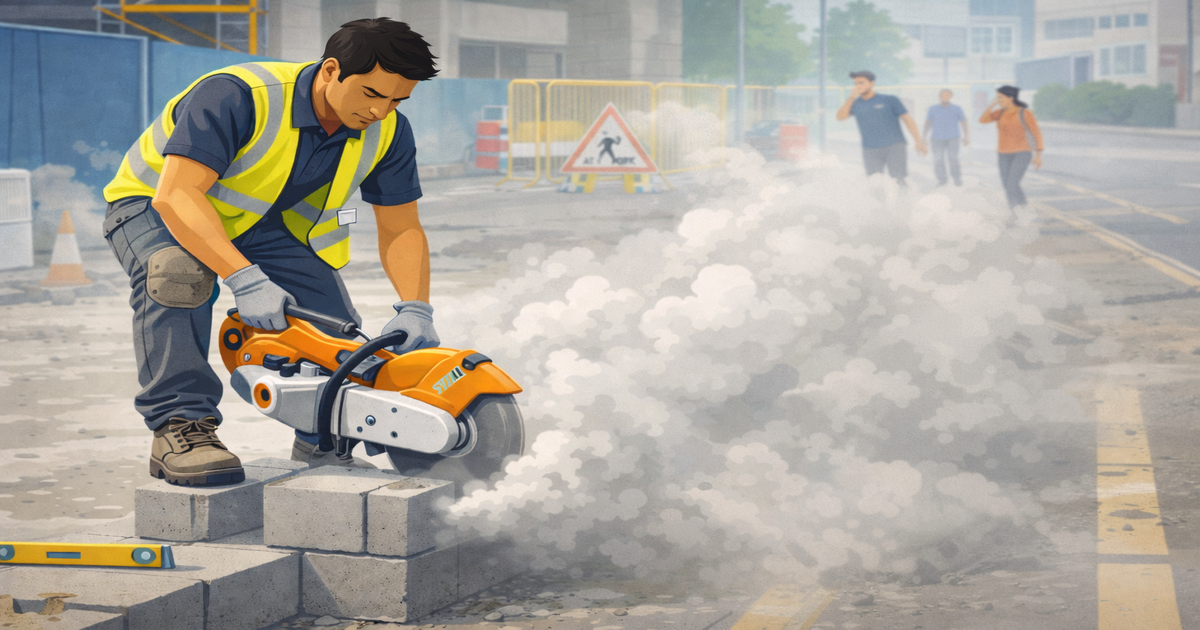
Bricklayer cutting block without dust suppression; showing visible plumes of silica dust

At a Glance: Bricklaying RAMS and Safety

  • The dust beacon: Visible dust plumes from dry cutting act as a beacon for HSE inspectors. A lack of documented suppression leads to immediate work stoppages and intervention fees.
  • Controlling Silica dust: The HSE targets small sites for Respirable Crystalline Silica. Compliant RAMS must specify water suppression or extraction as the default engineering control, not just masks.
  • The quick cut myth: Safety logic is black and white. A professional method statement removes the option for a “30-second dry cut,” requiring dust suppression for cutting tasks regardless of duration.
  • Cement and skin health: Wet cement causes chemical burns and dermatitis. A generic “wear gloves” instruction is insufficient; RAMS must specify barrier creams, washing facilities, and chemical-resistant gloves.
  • Defining access limits: Bricklayers work from scaffolding but do not build it. Your risk assessment must clearly state that you inspect scaffold tags before use but never remove ties or modify the structure.
Est. Read Time
⏱️ 7 Minutes

Pro Tip
💧 Wet Cut Always

Key Takeaway
🚫 Stop the Dust

The dust cloud beacon

You are on a small housing site. The mixer is running, the hods are moving, and the rhythm is good.

Then, one of the lads needs a closer for the end of the run. He grabs the Stihl saw, puts a foot on a block, and dry cuts it.

A massive plume of white dust goes up. It drifts across the site boundary and onto the cars parked next door.

That dust cloud is a beacon. If an HSE inspector is driving past, they will turn around. If a neighbour sees it, they will phone the council. The result is the same: the job stops.

The inspector walks onto the site, and the first thing they ask for is your risk assessment for bricklaying. For most small sites, this falls under routine general building work. If that document doesn’t explicitly cover Respirable Crystalline Silica (RCS) suppression, you are looking at a Notification of Contravention and a fee for intervention.

The Visible Compliance Check

❌ Dry cut (non-compliant)

  • • Visible dust plume
  • • Immediate HSE Beacon
  • • Risk of intervention fee

✅ Suppressed cut (compliant)

  • • Water bottle or extraction used
  • • No visible plume
  • • Compliant RAMS

The HSE crackdown on Silica

Respirable Crystalline Silica (RCS) is the biggest health target in the trade right now. The HSE now treats uncontrolled Silica exposure as a serious health risk, particularly on smaller sites.

The old attitude of “it’s just a bit of dust” is gone. Silica dust scars the lungs permanently. Because of this, inspectors are targeting smaller sites where dry cutting is still common.

Your paperwork needs to match the reality. You cannot have a method statement that says “wear a mask” while your team is engulfing themselves in dust.

The method must state engineering controls first. This means water suppression bottles or vacuum extraction on the tool. If your RAMS don’t clearly set out how dust is controlled at source, they are not compliant.


The “30-second cut” trap

The biggest friction point on site is the “quick cut.” A bricklayer argues: “It takes 30 seconds to cut this block. It takes me five minutes to set up the water bottle and hose.”

This is true. But the safety logic is black and white. You are either controlling the dust, or you are not. A professional masonry method statement accounts for this.

It states that water suppression is the default method, regardless of cut duration. It removes the option for the “quick dry cut” that gets the site shut down.

“There is no such thing as a ‘30-second dry cut’ under HSE expectations.”


The silent burn of wet cement

While Silica gets the headlines, wet cement can end careers. Many bricklayers treat cracked, bleeding hands as part of the job. They shouldn’t. Wet cement is highly alkaline.

It doesn’t just dry the skin; it causes chemical burns and allergic dermatitis. Once a bricklayer develops a sensitivity to hexavalent chromium in cement, they often have to leave the trade entirely.

A standard COSHH assessment for cement often just says “Wear gloves.” That is not enough.

Your RAMS need to specify:

  • Barrier creams before work starts.
  • Washing facilities to remove cement immediately, not at lunch time.
  • Correct glove standards (chemical resistance, not just rigger gloves).

Defining routine access

Your RAMS must also be clear on where your responsibility starts and ends regarding access. As a bricklaying contractor, you work from access provided by others.

You work from:

  • Pre-erected tube and fitting scaffolds
  • Loading bays
  • Mobile Elevated Work Platforms (MEWPs)
  • System scaffolding

You do not erect, alter, or dismantle scaffolding. That is a specialist trade. Your risk assessment should clearly state that you inspect the scaffold tag before use, but you do not modify the structure.

If you start moving boards or taking out ties to get a pack of blocks in, you are taking on a risk you are not insured for.

Who Controls What?

Bricklayer Responsible For

Cutting blocks
Mixing mortar
Using provided access
Inspecting scaffold tags

🛑 Not Responsible For

Erecting scaffolding
Altering ties
Moving boards
Structural changes


Why generic templates fail on COSHH

This is why downloaded templates are dangerous. A generic “Building Works” risk assessment might list “Dust” as a hazard and “Masks” as a control.

That is too vague for a commercial site manager. They want to know:

  • Is face-fit testing in place?
  • How is dust suppression achieved on site?
  • What FFP rating are the masks? (Must be FFP3 for Silica).

If you hand over a document that doesn’t answer these questions, you look like an amateur.


A system that applies the right safety controls

RapidRAMS works differently from a text editor. It links the hazard to the specific controls expected for that task.

Automated Silica Control

When you select “cutting blocks” or “grinding out mortar” as a task, the system builds the RAMS document automatically with the correct controls, including suppression, extraction, and the appropriate respiratory protection.

COSHH built-in

When you select “mixing mortar” or “pointing,” the system pulls in the correct cement dermatitis prevention data. It lists the specific alkaline risks and the required barrier controls. You don’t have to go looking for the safety data sheet; the logic is already there.

Site-Specific Reality

It allows you to declare the specific equipment for this job. If you are using a Stihl saw with a pressurised water bottle on a remote site, the document reflects that. If you are using a masonry bench saw with recycled water on a large commercial job, the document reflects that.


Winning work with better paperwork

Commercial clients are cautious about two things: accidents and HSE fines. If you submit a tender that includes a specific, detailed RAMS pack covering Silica suppression and skin protection, you solve a problem for them.

You prove that you are not going to be the contractor who brings an enforcement notice onto their project. You protect your lungs, you save your hands, and you win the contract.

R
Author
Written by the RapidRAMS Compliance Team
Content verified against current HSE guidance on: February 05, 2026

📚
More Guides Available

From our Knowledge Hub, covering practical safety requirements contractors face on managed sites.

Visit Knowledge Hub →

Bricklaying RAMS That Stand Up to HSE Checks

Clear controls for silica dust, cement, and site access

£15

Why is dry cutting blocks a major risk?

A dust cloud acts as a beacon for neighbours and HSE inspectors. If caught without explicit Silica suppression in your RAMS, you face a Notification of Contravention and intervention fees.

What controls must be in place for Silica dust?

Your method statement must state engineering controls first. This means using water suppression bottles or vacuum extraction on the tool, rather than relying solely on masks.

Why is “wearing gloves” not enough for cement work?

Wet cement causes chemical burns and allergic dermatitis. A compliant COSHH assessment must specify barrier creams before work, washing facilities for immediate cleaning, and chemical-resistant gloves.

Can bricklayers alter scaffolding to get materials in?

No. Erecting or altering scaffolding is a specialist trade. Your RAMS should state that you inspect the scaffold tag before use but do not modify the structure, such as removing ties or moving boards.

Why do generic templates fail commercial checks?

Generic templates are often too vague. Commercial site managers require specific details, such as the FFP3 rating of masks, confirmation of face-fit testing, and the specific water source used for suppression.

Stop Writing RAMS on Sundays: How to Reclaim Your Weekend

Stop Writing RAMS on Sundays: How to Reclaim Your Weekend

Contractor stressed with paperwork on Sunday vs relaxed with automated RAMS

At a Glance: Reclaiming Your Time

  • The hidden cost: Paperwork done on evenings and weekends is unpaid time. It lowers your effective hourly rate and eats into your rest.
  • The mobile edit headache: Editing Word documents on a phone is frustrating. Formatting breaks, fonts jump, and it takes twice as long to fix layout errors.
  • The “save as” trap: Recycling old templates often leaves “ghost data” behind, such as the wrong site address or client name, which leads to instant rejection.
  • Logic engine vs. typing: Digital workflows replace writing with selection. By declaring inputs (Task, Tools, Access, Location), the system builds the document for you.
  • The goal: Construction paperwork efficiency is about getting admin done during the working day so Sunday remains yours.
Est. Read Time
⏱️ 6 Minutes

Pro Tip
💡 Stop Typing

Key Takeaway
✅ Reclaim Your Sunday

The Sunday night shift

It is 8:00 PM on a Sunday. You have finished your roast, the kids are in bed, and the football is on. But instead of sitting down, you are clearing the dining table to make space for the laptop.

You have a job starting at 8:00 AM Monday, and the site manager has just texted to say he needs the RAMS in his inbox before you arrive.

This is the hidden shift that most small contractors work. The pricing, the invoicing, and the safety paperwork usually happens in unpaid personal time.

It eats into your rest, stresses your family, and starts your working week on the back foot.

The Admin Reality Check

❌ Sunday Night Admin

  • • Unpaid overtime
  • • High stress / family impact
  • • Rushed errors likely

✅ Friday Afternoon Admin

  • • Part of the paid workday
  • • “Work Mode” mindset
  • • Fresh memory of site details

The “mobile edit” headache

Some try to avoid the Sunday night shift by doing the paperwork in the van. You pull over, open a Word document on your phone, and try to edit a risk assessment on a five-inch screen.

“This is the hidden shift that most small contractors work.”

It is a miserable experience. You try to delete one line about “working at height” because you are on the ground floor, and suddenly the entire page formatting breaks.

The font size changes. The logo jumps to the bottom of the page. You spend twenty minutes pinching and zooming, trying to fix a document that looked fine on a desktop but is a disaster on mobile.

By the time you hit send, you are frustrated, and the document usually looks like a mess.


The “Save As” trap

The quickest way to get it done is the “Save As” method. You open the file from the last job, change the address, change the date, and save it as the new file.

This is where the real risk lies. It is easy to change the title but miss the details.

You end up sending a method statement for a shop fit in Bristol that still refers to “protection of school children” from the job you did in Birmingham last month.

Site managers spot this “ghost data” immediately. It tells them you haven’t read the document. It gets you rejected, which means you have to do it all over again, usually while you are trying to work.


The “Master Blurb” method

If you are sticking with manual documents, you need a better system than “Save As.” Stop editing the finished document. Instead, keep a “clean” text version of your standard method statement in the Notes app on your phone.

Break it down into blocks:

  • Standard Prep Work
  • Standard Painting Steps
  • Standard Clean Up

When you need to send a method statement, copy these clean blocks of text into your email or document editor. It is faster than fighting with Microsoft Word formatting, and it forces you to read the text as you paste it.

It stops the ghost data from sneaking in.


The Friday afternoon site prep

The other change is behavioural. Stop treating RAMS as a desk job. Treat them as a site job.

Do your information gathering at 3:00 PM on Friday, before you leave the current site or finish the site visit. Walk the job with your phone. Take photos of the access points.

Note down the specific hazards (e.g., “narrow stairs,” “occupied office”). If you capture the facts while you are still in “work mode,” the writing part becomes just a data entry task.

If you wait until Sunday, you have to try and remember the site details while your brain is trying to switch off. Doing this early means Sunday night becomes a check, not a rewrite.


Moving to structured workflows

Manual methods reduce effort, but they still depend on typing out text. Digital risk assessments remove that step. RAMS software for contractors replaces writing with selection.

Instead of typing “We will use a stepladder,” you select stepladder from a tool checkbox list. Instead of writing about signage, you select Occupied Area, and the correct controls are added for you.

Workflow Comparison

How a structured framework replaces manual effort.

⌨️

Manual Typing

Type text -> Format layout -> Check spelling -> Remember hazards

vs
🖱️

RapidRAMS Selection

Select Tool -> System adds Controls -> System Formats Doc

How logic saves time

This is the difference between a text editor and a RAMS software that applies safety rules automatically, like RapidRAMS. When you use a text editor (Word/Google Docs), you are responsible for the layout, the spelling, the phrasing, and the memory of hazards. The software is just a blank page.

When you use this type of system, you are responsible only for the inputs. You declare:

  • Task: Glossing door frames.
  • Tools: Sander, brushes.
  • Access: Ladder, mobile tower, scaffolding.
  • Location: Occupied office.

The system handles the output. It assembles the sentences, formats the layout, and ensures the safety controls match the hazards you selected.


Writing RAMS on mobile without the pain

Because these systems are built for data entry, they work properly on mobile. There is no pinching or zooming. You tap big buttons. You select from dropdowns.

You can sit in the van for ten minutes before you drive home on Friday and generate a full, site-specific document. By the time you get home, the email is already with the client.


Reclaiming the weekend

The goal isn’t just to be compliant. The goal is to separate your work life from your home life. Construction paperwork efficiency is about getting the admin done during the working day so that Sunday remains yours.

When RAMS are quicker to produce, easier to review, and harder to get wrong, they stop bleeding into evenings and weekends.

If you are still opening the laptop when the football starts, you are working for free. It is time to let a system do the heavy lifting.

“If you are still opening the laptop when the football starts, you are working for free.”

R
Author
Written by the RapidRAMS Compliance Team
Content verified against current HSE guidance on: February 01, 2026

📚
More Guides Available

This guide is part of our knowledge hub series, which focuses on practical ways contractors can reduce paperwork, avoid common mistakes, and work more efficiently.

Visit Knowledge Hub →

Reclaim Your Weekend

Task and site-specific RAMS done right

£15

Why is editing RAMS on a mobile phone difficult?

You try to delete one line and suddenly the entire page formatting breaks. You spend twenty minutes pinching and zooming, trying to fix a document that looked fine on a desktop.

Why do site managers reject recycled RAMS templates?

Site managers spot “ghost data” immediately. It tells them you haven’t read the document. It gets you rejected, which means you have to do it all over again.

How does the “Master Blurb” method work?

Keep a “clean” text version of your standard method statement in the Notes app on your phone. When you need to send a method statement, copy these clean blocks of text into your email or document editor instead of editing an old file.

How does RAMS software differ from a text editor?

When you use a logic tool, you are responsible only for the inputs. The system handles the output. It assembles the sentences, formats the layout, and ensures the safety controls match the hazards you selected.

How can I avoid writing RAMS on Sunday nights?

Treat them as a site job. Do your information gathering on Friday afternoon. If you capture the facts while you are still in “work mode,” the writing part becomes just a data entry task.

Winning Commercial Painting Contracts: The RAMS Advantage

Winning Commercial Painting Contracts: The RAMS Advantage

Commercial painting contractor working painting an office corridor

At a Glance: Winning Commercial Painting Contracts

  • Why do quotes get ignored: On commercial work, clients assess risk as well as price. A quote submitted without RAMS does not show the work has been properly planned.
  • Why RAMS matter commercially: Commercial clients carry responsibility for health and safety on their site and use RAMS to confirm a contractor understands the working environment.
  • What commercial RAMS must show: Awareness of occupied environments, including control of fumes, public access, fire risks, and storage of materials.
  • How can contractors stand out: Providing a sample RAMS pack with the initial quote demonstrates competence and readiness before the client asks.
  • The practical outcome: Clear, professional RAMS reduce perceived risk for the client and improve the chance of securing commercial work.
Est. Read Time
⏱️ 7 Minutes

Pro Tip
💡 Attach Sample RAMS

Key Takeaway
✅ Mitigate Perceived Risk

The silence after the quote

You price an office repaint. The spec is decent, the access is clear, and the numbers are sharp. You know the work inside out. You send the quote over by email and wait.

A week passes. Nothing back. No feedback. No negotiation. Just silence. What happens at that point is rarely about price. It is about confidence.

On commercial jobs, the Facility Manager or Quantity Surveyor (QS) is not just buying paintwork; they are buying risk mitigation.

If you sent a price on its own, while a competitor sent a price with a professional painting contractor method statement attached, they won the moment the email landed. They looked like a safe pair of hands. You looked like a gamble.

How Commercial Quotes Get Filtered Out

❌ Quote arrives with price only

  • • No method statement attached
  • • No evidence of working in occupied buildings
  • • Looks like domestic work
⬇️ Filtered out by FM / QS

✅ Quote arrives with sample RAMS

  • • Occupied environment addressed
  • • Fumes, access, fire risks considered
  • • Looks ready to start
⬇️ Shortlisted for approval


How commercial clients see risk

Domestic customers rarely ask how you will control fumes or manage access. Commercial clients do. Not because they enjoy paperwork, but because they carry legal responsibility for what happens on their site.

Under the Construction Design and Management (CDM) 2015 regulations, anyone commissioning construction work has a duty to ensure the contractor is competent. If a painter falls off a ladder on their property, the questions come back to them.

From their side of the desk, RAMS are not red tape. They are evidence. Evidence that the contractor has thought about the job, understands the environment, and can work without creating problems. If that evidence is missing, they literally cannot give you the Purchase Order.

Domestic vs. Commercial Expectations

Feature Domestic Job Commercial Job
Client Priority Price & Finish Safety & Compliance
RAMS Requirement Rare Mandatory
Main Hazard Spills on carpet Public/Staff Safety
Documentation Quote only Quote + RAMS + Insurance

What commercial RAMS need to show

Commercial painting risk assessments are not about listing generic hazards. They are about showing awareness of risks that do not exist in domestic work. If you want to win the contract, your paperwork needs to explicitly cover:

  • COSHH and Fumes: In an occupied office, you cannot just open a window. Your documentation must mention low-VOC paints or extraction to protect staff working nearby.
  • Public Safety: In a school or shop, the risk isn’t just to you. They look for controls on trailing leads, wet paint signage, and how you secure dust sheets so people don’t trip.
  • Fire Safety: They want to know where you store solvents and thinners overnight. If your paperwork doesn’t mention a lockable flammables box, you won’t get the keys.

If these points are missing, the client assumes you haven’t adjusted your method for a commercial environment.


The “Pre-Qualification” hack

Here is a simple way to stand out: Stop waiting to be asked. Most small contractors wait for the email asking for RAMS after they win the job. Successful contractors attach a “Sample RAMS” pack to the initial quote.

This sends a powerful psychological signal.

“It says: ‘I am not just a painter; I am a contractor. I am ready to start tomorrow, and I understand site rules.'”

It doesn’t need to be job-perfect at the tender stage. It just needs to prove you know how to address occupied environments and access control. That alone moves you out of the “domestic decorator” pile and into the “commercial contractor” pile.


A tool that builds the professional image

Here, RapidRAMS shifts from a safety requirement into a commercial advantage. It allows a small business to produce documentation that looks like it came from a national firm.

Commercial triggers

The system is built to handle the specific triggers that commercial clients look for.

  • Occupied Buildings: If you select “Occupied Office,” the system automatically adds the necessary segregation and signage controls.
  • Fatigue Management: If you select ladder use for routine tasks, the system checks the duration. If it exceeds 30 minutes, it prompts for breaks or alternative access, aligning you instantly with HSE standards.

The Return on Investment

This is the financial reality: You might spend £15 on a document. But if that document secures a £5,000 contract that you would have otherwise lost to a “safer-looking” competitor, that is the best money you will spend all year.


Winning the work

Winning decorating tenders is about removing reasons for the client to say “no.”

The client needs to be confident that you will do a good job, turn up on time, and not cause a health and safety incident. Your past work proves the quality; your RAMS prove the safety.

Make your quote bulletproof, and you will find that commercial doors start opening.

R
Author
Written by the RapidRAMS Compliance Team
Content verified against current HSE guidance on: January 31, 2026

📚
More Guides Available

This guide is part of our knowledge hub series.

Visit Knowledge Hub →

Secure Your Next Commercial Contract

Create compliant, site-specific RAMS in minutes

£15

Why do commercial painting quotes get ignored?

Commercial clients assess risk as well as price. Quotes submitted without RAMS do not show that the work has been properly planned.

Why do commercial clients ask for RAMS?

Commercial clients carry responsibility for health and safety on their site and use RAMS as evidence that the contractor understands the working environment.

What risks must commercial painting RAMS cover?

Commercial RAMS must address occupied environments, including control of fumes, public access and segregation, fire risks, and storage of materials.

Do RAMS need to be included with a commercial quote?

Many contractors wait to be asked for RAMS, but providing a sample RAMS pack with the initial quote helps demonstrate competence early.

How do RAMS help win commercial painting work?

RAMS help by showing the client that the contractor has considered site conditions and can work safely without creating problems.

How to Pass a Site Manager’s RAMS Review First Time

How to Pass a Site Manager’s RAMS Review First Time

Site manager reviewing RAMS paperwork on a construction site

At a Glance: How to Pass the RAMS Review

  • Why RAMS fail: Rejections usually happen when RAMS list generic hazards or tools that are not actually present on the site.
  • The passing standard: Site managers approve RAMS that reflect the specific site layout, access routes, and working environment.
  • Generic vs site-specific: Generic RAMS describe a trade in theory. Site-specific RAMS describe how the work will be done on this site, on this day.
  • When RAMS are required: Typically required when working under a Principal Contractor or in managed environments such as schools, hospitals, and offices.
  • The boundary: Standard RAMS are not suitable for high-risk work such as asbestos, confined spaces, or deep excavations, which require specialist planning.
Est. Read Time
⏱️ 8 Minutes

Pro Tip
💡 Cut the filler

Key Takeaway
✅ Site-specific wins

The copy and paste trap

You hand your folder over at the site induction. The site manager flips to page four, stops, and looks at the tools list.

He points to a line item for “Hot Works and Grinding” and then looks at the pile of carpet tiles in your van.

“You’re here to lay carpet tiles,” he says. “Why does your risk assessment say you’re using an angle grinder? And why is the site address on the cover sheet still listed as the job you did last month in Leeds?”

The induction stops. You are told to go back to the van and sort the paperwork out. You lose two hours of the morning sitting on the dashboard trying to scribble out the wrong bits with a biro.


Why templates fail in the real world

This sort of delay is routine on site. It is usually caused by paperwork that tries to describe every possible job, rather than the one actually being done.

Most contractors grab a standard “Builder’s RAMS” template online. These documents are often bloated with hazards like excavations, roof work, and crane operations. That approach makes little sense when the work is routine and better suited to SME-scale RAMS.

The “Safe” Template Contradiction

⚠️ The Template Lists

“Deep Excavations”
“Heavy Plant Machinery”
“Roof Work”

✅ The Actual Job

“Interior Fit-Out”
“Hand Tools Only”
“Ground Floor”

When you use that document for a simple fit-out job, you hand over a pack of contradictions.

The site manager sees a document that claims you are managing risks that do not exist. This tells him you have not looked at the actual job.


What the site manager is reading

Without the filler, a RAMS document is simply a plan for how the day’s work will be carried out.

  • Risk Assessment: The specific hazards on this site (e.g., other trades working above you, trailing cables in the corridor).
  • Method Statement: The sequence of work you will follow to get the job done without hurting anyone.

It is an instruction manual for your team on this specific project. It is not a generic library of every risk in the construction industry.

“A RAMS document is simply a plan for how the day’s work will be carried out.”


When you need to provide them

You generally do not need written RAMS for domestic work unless the homeowner asks for them. The requirement kicks in when you enter a managed environment.

You will need approved paperwork for:

  • Sub-contracting to a Principal Contractor
  • Work in schools, hospitals, or public buildings
  • Office fit-outs and retail refurbishments
  • Maintenance contracts for housing associations

In these scenarios, the person running the site is expected to check that your method statement makes sense before work starts. That is why the paperwork gets scrutinised. That is why they are fussy.


The scope of routine work

In most small firms, the work is repeatable and well understood. The associated risks are familiar and managed as part of normal practice, for example:

  • Joinery and second fix carpentry
  • Plastering and drylining
  • Floor laying and tiling
  • Painting and decorating
  • Minor electrical or plumbing works (non-gas)
  • Suspended ceiling installation

If your work falls into this bracket, your RAMS should be short and to the point. They should not look like a demolition plan.


Why generic RAMS get rejected

The difference between generic and site-specific RAMS is usually the reason for rejection.

A generic document lists standard hazards for a trade (e.g., “Working with wood dust”). It applies to any joiner on any site.

A site-specific document addresses the actual conditions (e.g., “Cutting wood in the designated cutting bay on the ground floor to prevent dust migration to the occupied offices upstairs”).

Site managers reject generic RAMS because they do not account for the environment. If your document ignores the fact that the site is a busy school corridor, it is worthless.

“The manager trusts a document that mentions the specific constraints of their site.”


Where the line is drawn

There is a hard limit to this simplified approach. If your work involves high-risk activities, standard RAMS are not enough.

This logic does not apply to:

  • Working with asbestos or lead
  • Confined spaces
  • Deep excavations (over 1.2m)
  • Structural steel erection
  • Chemical stripping or industrial cleaning
🛑

Critical Scope Exclusions

Standard RAMS templates are never sufficient for high-risk work. These tasks require specialist permits and licensing.

Asbestos
Confined Spaces
Excavations > 1.2m
Structural Steel

These tasks require specialist planning, permits, and often specific licenses. Trying to cover these risks in a standard trade risk assessment is a red flag that will get you removed from the site immediately.


What the HSE actually wants

The Health and Safety Executive (HSE) focuses on “suitable and sufficient” assessments. They do not demand length. They demand relevance.

HSE guidance suggests that paperwork should be proportional to the risk. For lower-risk trades, a concise document that covers the main hazards is far better than a thick document that buries the truth in legal filler.


The administrative burden

Keeping paperwork specific is difficult when you are running a business from a van. You might do a shop fit on Monday and a school repair on Wednesday.

The risks are totally different, but the temptation is to use the same document to save time. Editing a static Word document on a mobile phone screen is frustrating. You delete one line and the formatting breaks.

You try to add a specific hazard and the page numbers go wrong. Eventually, people give up and just send the old file, hoping for the best.


Moving away from editable templates

This is where dedicated RAMS compliance software like RapidRAMS takes a different approach. Instead of asking you to edit text, it asks you to declare facts.

The process starts by selecting the task, equipment, and site setting. The system checks eligibility almost immediately, so you know early whether it can proceed. Where it does, the document is generated strictly from those choices.


Consistency controls

The main reason for rejection is contradiction (e.g., saying you are drilling but listing no eye protection). The system links the choices together. Choosing a noisy tool brings in hearing protection.

Selecting scaffold access brings in checks like Scafftag status. That linkage removes the small contradictions site managers notice first. This stops you from accidentally handing over a document that suggests the work is outside your competence.

How The Logic Engine Works

The system automatically links hazards to controls to prevent contradictions.

You Select:
Concrete Breaker 🔨
⬇️
System Adds:
Ear Defenders ✅


The result

The document lands on the site manager’s desk with zero padding. It references the specific site address, the tools in the van, and the specific hazards of the job.

Because it is accurate, it passes the mental construction RAMS checklist that every site manager runs through their head.


Getting the green light

The goal is not a perfect folder. It’s getting the gate unlocked. Give the site manager a document that actually describes the job, and they’ll stop looking for reasons to turn you away.

R
Author
Written by the RapidRAMS Compliance Team
Content verified against current HSE guidance on: January 31, 2026

📚
More Guides Available

This guide is part of our knowledge hub series.

Visit Knowledge Hub →

Pass your next RAMS review

Task and site-specific RAMS without the guesswork
£15

Why do site managers reject RAMS documents?

Site managers reject RAMS when they contain generic hazards, incorrect site details, or contradictions that suggest the work has not been properly planned.

What makes RAMS site-specific?

Site-specific RAMS describe the actual site conditions, access routes, working areas, tools, and controls relevant to the specific location.

Are RAMS required for all jobs?

RAMS are usually not required for domestic work unless requested. They are expected when working under a Principal Contractor or in managed environments such as schools, hospitals, offices, and public buildings.

Why are generic RAMS a problem on site?

Generic RAMS describe hazards that do not exist on the site and fail to account for real-world constraints such as occupied areas and shared access routes.

How detailed should RAMS be for routine trade work?

For routine trade work, RAMS should be short and to the point, covering only the hazards associated with the work being carried out.

When are standard RAMS not sufficient?

Standard RAMS are not sufficient for high-risk activities such as asbestos work, confined spaces, deep excavations, or structural steel erection.

Why do RAMS fail first review?

RAMS often fail first review because they contain contradictions, such as listing tools, hazards, or controls that do not match the work being done.

Ladder Safety for Decorators (HSE INDG401)

Ladder safety for decorators (INDG401)

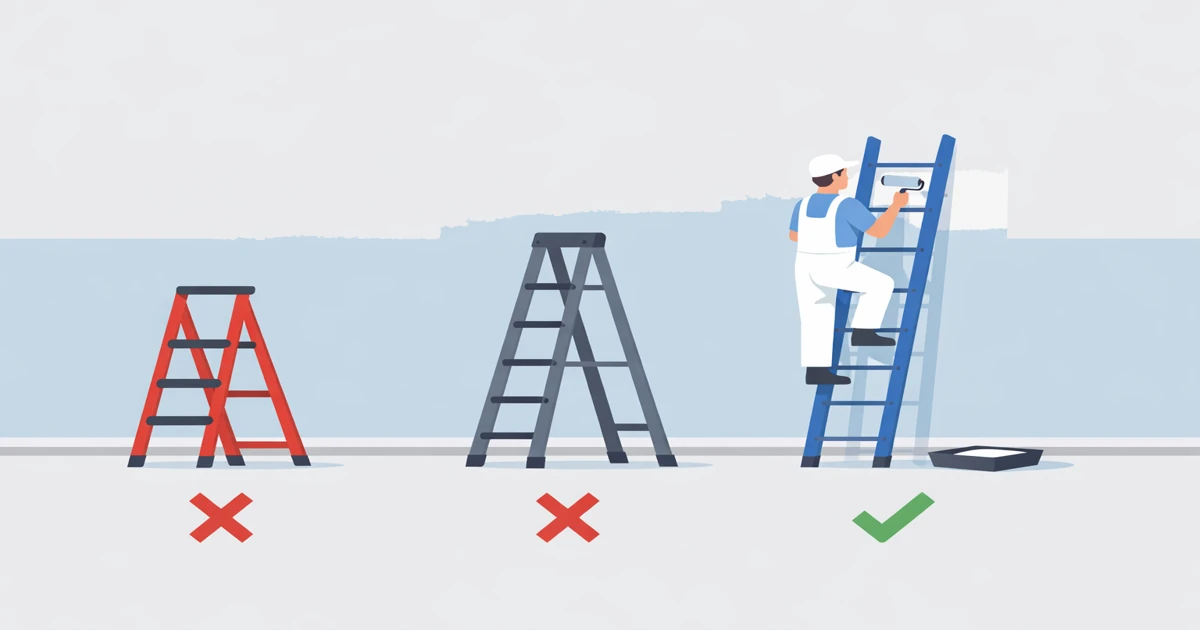
Illustration showing incorrect and correct ladder selection for painting and decorating tasks, highlighting safe work at height practices

At a Glance: Why Painting RAMS Get Rejected?

  • Mismatch: Using generic construction templates for specific painting tasks.
  • Access: Listing equipment (towers/scaffolding) that isn’t actually on site.
  • Relevance: Including hazards irrelevant to painting and decorating.
  • Solution: Use specific painting and decorating risk assessments that match the site conditions.
Est. Read Time
⏱️ 6 Minutes

Pro Tip
💡 Match RAMS to Reality

Key Takeaway
🚫 Avoid Generic Templates

The paperwork versus the van check

It is 7:30 AM. You are parked outside a commercial refurbishment job, boot open, ready to start the prep work. The site manager walks over, clipboard in hand, and asks to see your RAMS. He glances at the document, looks at the stepladder in the back of your van, and hands the paperwork back.

“You can’t start,” he says. “Your method statement says you’re using a mobile tower, but you’ve only brought steps. And this risk assessment talks about brick dust. Come back when the paperwork matches the job.”

This happens every day. Competent decorators lose hours or entire mornings not because they don’t know how to paint safely, but because their paperwork describes a completely different job.


The problem with generic templates

The issue here is rarely a lack of skill. Most professional decorators know exactly how to set up a safe workspace. The problem lies in the documentation systems used to describe that work.

Standard safety templates are often built for large-scale construction projects. They try to cover every eventuality, from excavations to heavy plant machinery. When a painting contractor downloads a generic template, they often end up with forty pages of hazards that have nothing to do with painting a hallway.

This creates a mismatch. The site manager sees a document full of irrelevant risks and assumes you haven’t actually planned the specific job in front of you.


What RAMS are actually for

At its core, a risk assessment for painting works is just a practical plan. It tells the site management team two things:

  • Risk Assessment: What might go wrong (e.g., spilling paint on a carpet, falling off a ladder, fumes in a confined room).
  • Method Statement: How you are going to do the work without those things happening.

It is not a legal essay. It needs to be a clear instruction set for the specific site you are walking onto.


When access RAMS are requested

Access-related RAMS are commonly requested when the decorating involves:

  • Working above normal reach height
  • Occupied or partially occupied buildings
  • Shared work areas with other trades
  • Visible use of steps, A-frames, or leaning ladders

In most cases, the site manager is not looking for volume. They want reassurance that the access equipment has been chosen properly for the task and the environment.


Routine painting tasks

Most painting jobs fall into a predictable routine. The paperwork should reflect this simplicity. We are talking about:

  • Interior emulsion and glossing
  • Surface preparation (sanding, filling, cleaning)
  • External masonry painting at low levels
  • Window frame preparation and painting
  • Using water-based or standard solvent-based paints

If the job involves these standard tasks, the paperwork should be straightforward. It does not need to cover heavy demolition or structural alterations.


Why access RAMS get rejected

Rejection usually comes down to trust. Site managers do not trust paperwork that contradicts what they can see on site.

Site managers start asking questions when the document lists access equipment that is not being used, includes hazards that are not present, or relies on generic statements copied from elsewhere. When the obvious details are wrong, everything else gets questioned.

A short document that clearly states how access is being used on that job is more credible than a long one trying to cover every possibility.


Where routine work ends

There is a clear professional boundary with decorating access.

If the task requires repeated overreaching, extended time without moving, poor footing, or any situation where access cannot be adjusted safely, it falls outside routine decorating work.

Being clear about that boundary shows judgement. It avoids forcing unsuitable work into paperwork that was never meant to cover it.

⚠️ Professional Boundary: If the work involves sustained overreaching, long periods in one position, unstable surfaces, or conditions that prevent safe repositioning, it is no longer routine decorating work. At that point, the approach needs to change.


The HSE logic on ladders

The Health and Safety Executive (HSE) does not ban ladders. They simply require that ladders are used only when they are the most suitable equipment for the task.

For decorators, this means ladders are acceptable for “short duration” and “light work.” If your risk assessment justifies why a ladder is better than a podium or tower (for example, due to space constraints in a narrow corridor) and confirms the work is short-term, most site managers will accept it. The key is proportionality.


The difficulty of accurate paperwork

Creating specific paperwork for every small job is difficult. A decorator might visit three different sites in a week. One is an occupied office where the main risk is the public tripping over dust sheets. The next is an empty new build where the main risk is uneven flooring.

Rewriting a document from scratch for every job takes time you don’t have. Using the same old document for every job gets you kicked off site. It is a difficult balance to strike manually.


A tool that enforces logic

This is where RapidRAMS operates differently from a template library. It functions as a logic-based tool rather than a text editor.

You enter the specific parameters of the job: the task (e.g., “Glossing door frames”), the tools (e.g., “Step ladder, sanding block”), and the environment (e.g., “Occupied office”). The system then generates the documentation based strictly on those inputs.

The Refusal Logic

Crucially, the system has hard limits. If you try to select “External Decoration” combined with “High-Risk Asbestos Removal,” the system refuses to generate the RAMS. It forces you to acknowledge that high-risk work requires a different level of planning.

The Site Manager Benefit

Because the system strips out the padding, the resulting document is concise. It tells the site manager exactly what you are doing and nothing else. It creates a document that is:

  • Specific: It only lists the hazards of painting and ladder use.
  • Credible: It uses the correct terminology for ladder classes and usage limits.
  • Safe: It prevents you from accidentally signing off on high-risk exclusions.

You still have to check the document and ensure you can work to the method stated, but the drafting process ensures the logic holds up before you print it.


Getting on site faster

The goal of safety documentation is not to fill a folder. It is to get the work approved so you can start earning. By presenting a risk assessment for painting works that is specific, accurate, and free of generic clutter, you demonstrate competence before you even pick up a brush. The site manager spends less time querying your paperwork, and you spend more time on the job.

R
Author
Written by the RapidRAMS Compliance Team
Content verified against current HSE INDG401 guidelines on: January 28, 2026

📚
More Guides Available

This guide is part of our knowledge hub series.

Visit Knowledge Hub →

Create your INDG401 compliant RAMS

Site-ready RAMS without the paperwork headache

£15

How to Write a Method Statement for Painters and Decorators

How to Write a Method Statement for Painters and Decorators

If your method statement has ever been rejected five minutes before a job was due to start, you are not alone. Painters and decorators regularly lose time because paperwork does not line up with what is actually happening on site.

Est. Read Time
⏱️ 5 Minutes

HSE Reference

Pro Tip
💡 Clarity beats volume

⚠️ Professional Boundary: Standard decorating method statements are not sufficient for specialist activities such as lead paint removal or other high-risk processes that require specific licensing and advanced controls. Trying to force those tasks into a standard decorating method statement introduces risk and undermines the document.

The Gap Between Desk and Site

What looks fine at the desk can quickly fall apart when reviewed by a site manager who understands the work.

For most decorators, the issue is not effort. It is that writing a method statement properly takes time, and getting it wrong leads to delays, queries, and rework.

This guide forms part of our knowledge hub series and explains when a method statement is needed for painting and decorating work, and how to get it right without wasting time.


What is a method statement in decorating work?

A method statement explains how a specific task will be carried out safely on a particular site. It sets out the sequence of work, the tools being used, the hazards involved, and the controls in place to manage those risks.

For painters and decorators, it usually sits alongside a risk assessment as part of RAMS. Together, they explain what you are doing and how you will do it without putting people at risk.

Risk Assessment (The WHAT)

  • Identifies significant hazards.
  • Assesses who might be harmed and how.
  • Evaluates the risk level.

Method Statement (The HOW)

  • Details the sequence of work.
  • Specifies tools and access equipment.
  • Describes practical control measures.

“A good method statement reflects the actual job. A poor one reads like it could apply anywhere.”


When do painters and decorators need a method statement?

Method statements are commonly requested when:

  • Working on commercial or managed sites
  • Using access equipment such as steps, podiums, towers, or MEWPs
  • Carrying out internal work in occupied buildings
  • Applying paints, thinners, fillers, or solvents
  • Working alongside other trades

Even for routine decorating work, many clients and principal contractors expect to see a clear method statement before allowing work to start.

The level of detail should reflect the job itself. Routine decorating does not require the same level of detail as specialist or high-risk work.


Typical decorating tasks covered by method statements

For routine, non-specialist decorating work, method statements often cover tasks such as:

  • Surface preparation including sanding and filling
  • Application of water-based and solvent-based paints
  • Use of stepladders, extension ladders, podiums, or mobile access equipment
  • Internal and external painting at low level
  • Cleaning of tools and safe storage of materials

These are standard activities for competent decorators. The method statement should describe how they are carried out safely on that specific site.


Why decorating method statements are often rejected

Most rejected method statements fail for the same reasons.

3 Common Rejection Triggers

1. Generic Templates

Mentioning heavy access equipment for a simple interior job reveals the document hasn’t been tailored.

2. Lack of Detail

Saying “work at height will be managed” is meaningless without specifying steps, podiums, or MEWPs.

3. Inconsistency

If the Method Statement says one thing and the Risk Assessment says another, confidence is lost.

“It’s hard to trust a safety plan that doesn’t reflect the room you’re standing in.”

❌ The Template Trap

Generic Construction RAMS

  • Lists irrelevant hazards (e.g., excavations).
  • Mentions equipment not on site.
  • Vague on actual work methods.
Result: REJECTION

✅ RapidRAMS Way

Specific Painting RAMS

  • Lists only painting-related hazards.
  • Specifies exact tools & access (e.g., stepladder).
  • Clear, step-by-step sequence.
Result: APPROVAL

Saying “work at height will be managed safely” means very little if the document does not explain whether steps, a podium, or a MEWP will actually be used.

Compliance is about accuracy, not volume. When a site manager sees that your document aligns with the hazards in the room, it gets signed off.


The safety logic behind method statements

UK health and safety law does not require excessive paperwork. It requires risks to be assessed and controlled in proportion to the work.

Health and Safety Executive guidance, including L153 and the INDG series, is clear that risk assessments and method statements must be suitable and sufficient. They should explain how work will actually be done, not how it looks on paper.

For painters and decorators, that means focusing on access, substances used, the sequence of work, and how people are protected from foreseeable harm.


Why writing one properly is harder than it looks

On the surface, a decorating method statement seems simple. In reality, site conditions can change the safety requirements immediately. A live office presents different risks to an empty shell, and certain paints and solvents introduce specific ventilation needs.

This is where static paperwork fails, as it does not reflect the environment in which the work is being carried out.


A smarter way to approach method statements

On many sites, manual templates are no longer fit for purpose. We developed RapidRAMS to make this process a bit more straightforward.

Instead of wrestling with a template, you describe the task, select the tools and access method. The RAMS software builds a document based on your specific site conditions, so it’s proportionate and honest.

The system adapts to the declared tools, tasks, and site conditions. If you state you are using stepladders, the controls reflect that. If you declare standard trade paints and fillers, COSHH content is included accordingly.

RapidRAMS applies consistent UK safety logic within defined boundaries and refuses to generate documents for work that falls outside scope. Responsibility stays with the contractor, because the content is driven by their inputs.

For painters and decorators who want credible paperwork without paying consultant rates, this approach reduces rework and site queries.

In practice, this cuts down on the back-and-forth before work starts and improves acceptance because the paperwork reflects what will happen on site.


Getting it right without overcomplicating it

A good method statement does not need to be long. It needs to be accurate.

When producing RAMS for painters and decorators, clarity beats volume every time. When the document matches the task, it stands up to scrutiny and supports safe working rather than delaying it.

That’s the standard you need to keep the work moving and site managers happy.

R
Author
Written by the RapidRAMS Compliance Team

Create your Painter’s Method Statement

Stop writing from scratch. Generate site-specific RAMS.

£15

What is RAMS in Construction? A Practical Guide for SMEs (HSE L153)

What is RAMS in Construction? A Guide for SMEs

If you have ever had a site manager push your paperwork back across the table and say, “This does not match the job,” you already know the problem. RAMS are meant to help work run safely and smoothly. Too often, they just slow everything down.

Construction site manager reviewing RAMS paperwork on a tablet vs generic paper templates
Est. Read Time
⏱️ 4 Minutes

HSE Reference

Key Takeaway
🚫 Avoid Generic Templates

The Admin Burden

For small and medium contractors, RAMS can feel like a box-ticking exercise that eats time at the worst moment, usually just before work is due to start. Systems are complicated. Templates look quick but carry hidden risk. And once the document is questioned, the delay is on you.

This knowledge hub guide explains what RAMS are, why they matter, and how SMEs can approach them in a way that is defensible and practical for routine construction work.


What does RAMS mean?

RAMS stands for Risk Assessments and Method Statements.

A risk assessment identifies what could cause harm during a task and sets out controls to reduce that risk. A method statement explains how the work will be carried out safely, step by step.

In construction, the two are normally combined into a single document, often referred to as RAMS for small and medium contractors. That document tells anyone reading it what the job is, how it will be done, and how people will be kept safe while doing it.

RAMS are not about covering every possible scenario. They are about clearly describing the actual work you plan to carry out.


Why RAMS cause problems for SMEs

Most issues with RAMS come from one of two places.

The first is complexity. Large safety management systems are often designed for major projects, not small teams doing routine work. They ask for excessive detail, repeat information, and take far longer than the job itself.

The second is templates. Generic RAMS are easy to copy, but they often include risks, controls, and wording that have little to do with the task on site. When paperwork does not reflect reality, it stands out immediately.

The “Generic Trap”

The Template

Lists “Working at Height” generically. Includes hazards not present on site. Uses vague language like “Ensure safety.”

The Result

Site Manager rejects it. “This does not match the job.” Work stops. Reputation damaged.

This is why site managers challenge RAMS. If the document says one thing and the work looks different, confidence is lost. Revisions are requested, supervisors wait, and productivity drops.

From a safety point of view, generic RAMS are also weak. If something goes wrong, it is harder to show that risks were properly considered for that specific task.


Where RAMS fit and where they do not

RAMS are intended for routine, non-specialist construction activities carried out by competent contractors.

They work well for planned tasks where hazards are known, controls are established, and the work follows a sensible sequence. They are not suitable for high-risk or specialist activities that require detailed engineering input, specialist design, or separate permits.

This boundary matters. Forcing every task into the same RAMS process either creates paperwork that is meaningless or encourages people to downplay risk. Neither helps anyone.

⚠️ Scope of Guidance: This guide is intended for routine, non-specialist works. RapidRAMS does not support high-risk activities such as Asbestos Removal, Structural Demolition, or Live Gas Works. For these tasks, you should consult a specialist safety engineer.


The safety logic behind RAMS

UK health and safety law does not require paperwork for its own sake. It requires risks to be assessed and managed in proportion to the work.

The Health and Safety Executive makes this clear across its guidance, including documents such as L153 and the INDG series. The expectation is that risk assessments are suitable and sufficient, and that method statements explain how controls will actually be applied.

In practice, this means RAMS should be based on the job as planned, not on generic phrases copied from somewhere else. They should be understandable to the people doing the work and credible to those reviewing it.

“Good RAMS reflect thinking, not formatting.”


A more practical approach to RAMS

This is where tools like RapidRAMS fit.

RapidRAMS is designed for competent contractors carrying out routine construction work who want proportionate documentation without handing responsibility to a consultant or paying for work that does not add value.

The software generates RAMS documentation based entirely on information declared by the user through a structured web form. The output reflects what the user says about the task, the environment, and how the work will be done.

There is no generic padding and no invented risks. If a control is not supported by the inputs, it does not appear. If the task falls outside defined boundaries, the system refuses to generate documents.

This matters because many RAMS fail precisely because they say too much. RapidRAMS applies consistent UK safety logic but stays within scope. The contractor remains responsible for the content, because it is their declaration that drives the document.

The result is RAMS that are task-specific, readable, and aligned with what actually happens on site.


Why task-specific RAMS matter

When RAMS match the work, discussions on site change. Supervisors recognise the task. Site managers see logic rather than filler. Questions reduce, and work starts sooner.

More importantly, people understand the controls they are expected to follow. That is the real purpose of RAMS.

For SMEs, the goal is not perfect paperwork. It is clear, honest documentation that follows established HSE principles and supports safe work without slowing it down.

Ready to create task-specific RAMS?

Generate a site-ready PDF

£15